
Trace a Suffolk Deed Chain by Era
The method is simple. Start with the newest transfer and work back one acquisition at a time. Repeat the same check at every step. Suffolk's public Clerk page never states where the online index cuts off. A recent chain may be searchable through Virginia SRA. Older books and Nansemond-era records often require the Clerk's counter or the Library of Virginia. Treat the table as a working timeline you fill from verified instruments. It is not a sample Suffolk transaction.
| Chain stage | Date to record | Source to check | What to compare |
|---|---|---|---|
| Newest grantee transfer | Deed recording date | Spatialest reference and SRA | Grantee, grantor, parcel description |
| Prior acquisition | Earlier deed date | SRA or Clerk's book | Next grantor-to-grantee link |
| Online search ends | Last indexed year confirmed by Clerk | Land Records Division | Local cutoff and older book route |
| Pre-1974 chain | Date on the old instrument | Nansemond/LVA collection | Predecessor name and legal description |
The cutoff row stays blank until the Clerk confirms it. If SRA coverage stops, change the source, not the logic. Grantor, grantee, locality name, and legal description still connect the older books to the current tax parcel.
Use Suffolk's Deed Index to Find the Prior Grantee
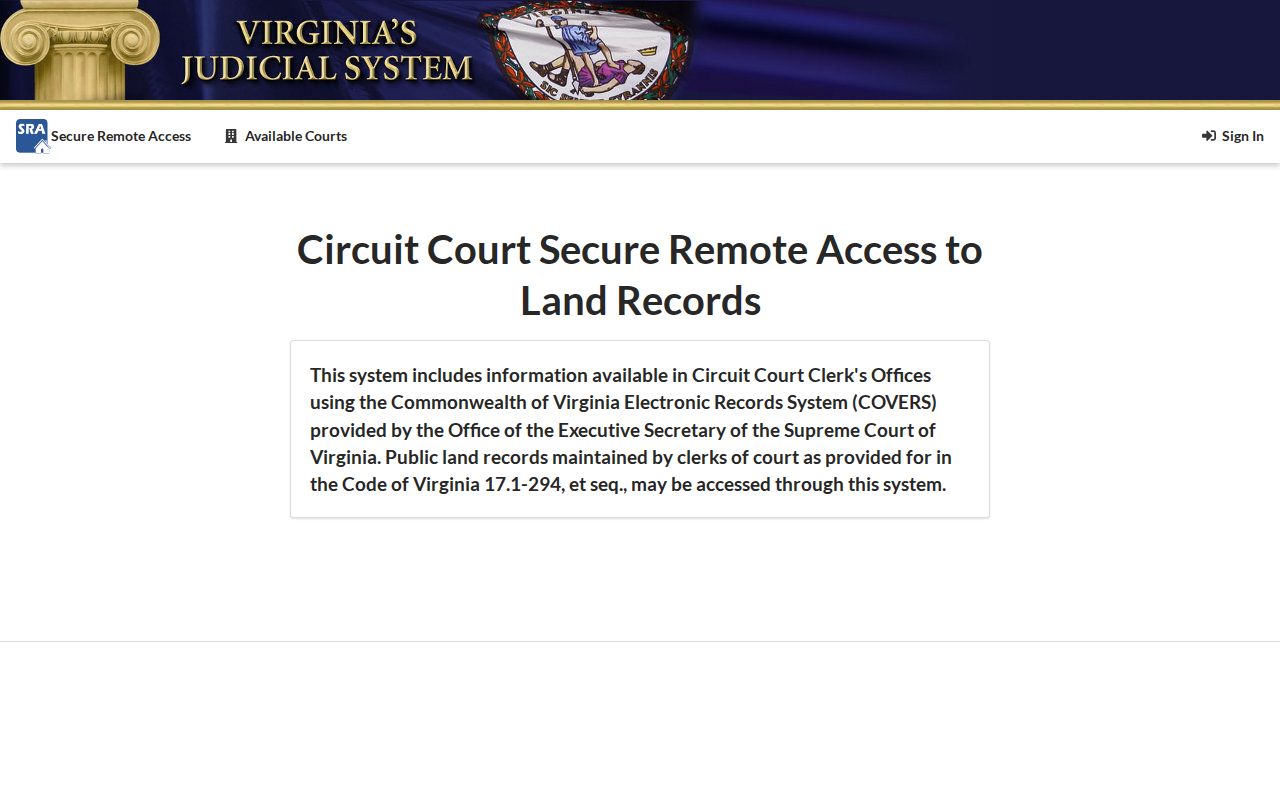
Virginia's statewide land-record search is the natural first index for recent Suffolk instruments. Start there. Look up a verified current owner as grantee. Note the deed that conveyed the property to that owner. That deed's grantor becomes your next earlier grantee. Keep repeating the loop until the chain thins out.
Remember what the index is. It is a finding aid only. The recorded instrument remains the real evidence of each transfer and its land description. Suffolk's public Clerk information does not state the earliest year the online index covers. So a blank result never proves the parcel had no earlier owner.
Images follow a separate path. Suffolk notes that the online search may provide index access. Viewing instrument images requires Clerk-authorized subscription access. An index row may list a book and page or instrument number. Write the reference down. Then arrange image access or ask staff for a copy. For older owner research, give the Clerk the party names. Add an approximate recording date and that reference. An address alone is not enough.
See the Virginia statewide land-record search entry screen before you begin. It displays the grantor and grantee search route. The entry page itself is only a search aid, not a Suffolk deed image.
Keep a separate chronology for each candidate chain. Write down the name searched, the date range, the index reference, and whether the deed itself was examined. This habit prevents a common-name hit from quietly entering the property's history. A similarly named parcel gets caught the same way.
Check Nansemond Sources for Earlier Suffolk Owners
Suffolk became an independent city through the 1974 consolidation with Nansemond County. It also absorbed the former towns of Holland and Whaleyville. That history matters for deed research. Land inside the current city boundary was often deeded under a predecessor locality's name. A search limited to "City of Suffolk" can therefore miss an older catalog entry. Does your chain cross the consolidation date? Keep the exact place name written on the instrument. Ask which predecessor series covers that tract.
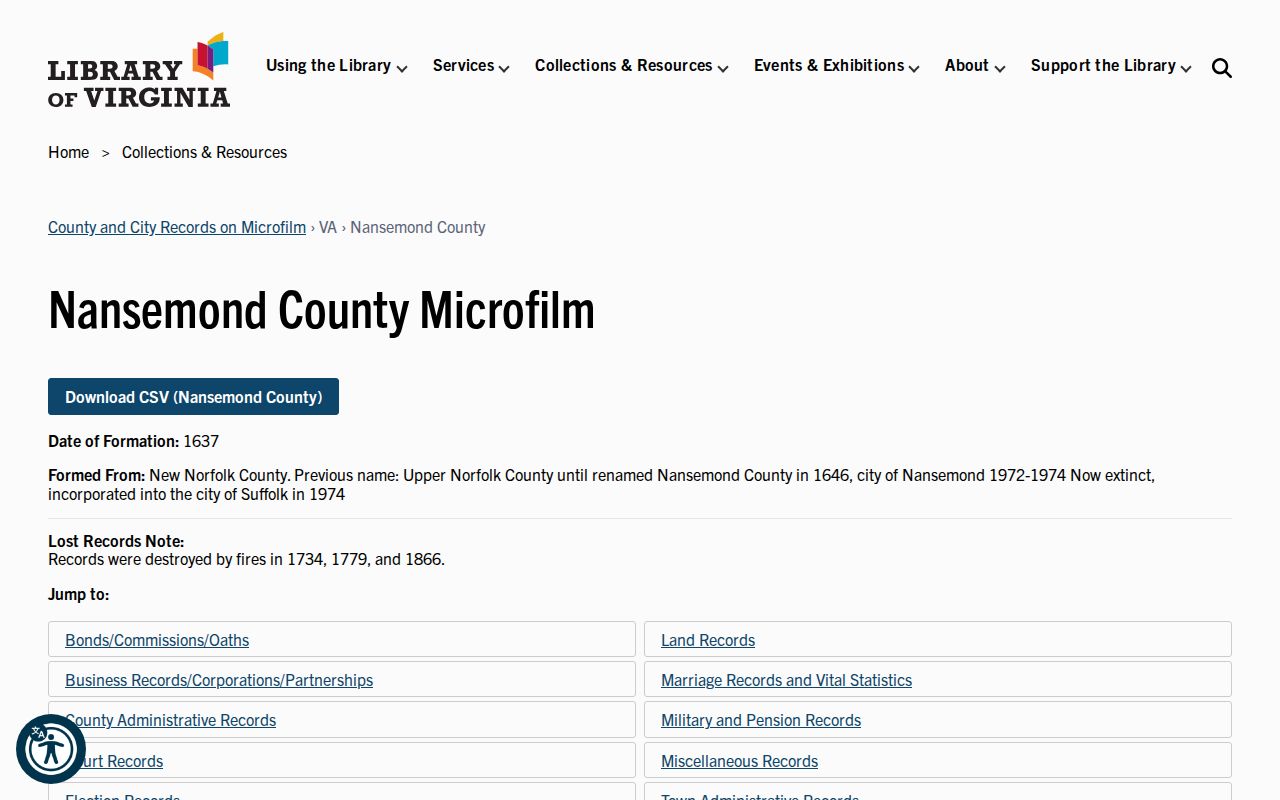
The Library of Virginia holds Nansemond County records on microfilm and in original formats. It is a research lead, not a one-stop database for every Suffolk deed. Give the archive or Clerk a deed-book citation, party names, and a period. One hard limit stands. The 1837 courthouse fire destroyed most local vital records and courthouse material. That loss does not mean every later land record is gone. Many survive.
The Library of Virginia's Nansemond finding aid is the route into that predecessor-locality material.
A family name, a neighborhood name, or a mailing address is never enough to pin down the old tract. Compare the land description and the adjoining references in each recorded conveyance. Names get indexed with spelling variants, so search the likely forms and note which spellings you checked.
Match Suffolk Former Owner Deeds by Land Description
Street addresses lose their reliability as a chain of title ages. A parcel may have been divided, combined, or renamed. Older deeds often describe land by metes and bounds instead. Build a comparison set from the newest instrument. Include the full legal description, parcel map references, lot and block, subdivision name, acreage, and named roads. The goal is not a familiar street label on an old deed. It is proving that the same land moved from one grantor to the next.
Older deeds sometimes reference a larger parent tract. When one does, follow the later division instruments in date order. A single lot today may carry separate chains for pieces assembled at different times. A plat may explain a layout or road name. A GIS overlay works only as orientation. It never replaces the filed deed or a survey. When the legal description shifts materially, stop and ask one question. Does the chain cover the full parcel, a partial conveyance, or a neighboring tract?
Note every exception, reservation, easement, life estate, and named trustee as each transfer comes up. A deed records the interest conveyed on its stated terms. It may not describe every interest. It cannot resolve a title question by itself. Former-owner research maps the documentary sequence. A title professional decides what that sequence means for a present transaction.
Use Suffolk Deed Books and Preservation Leads Carefully
One preservation reference names Suffolk City Deed Book 34, covering 1893 through 1895. That citation is narrow. It points an archival inquiry; it is not a county-wide or city-wide coverage range. Before travelling, ask whether the particular volume, index, or image sits locally, at the Library of Virginia, or in another collection. No office publishes an all-years index cutoff or a complete schedule for older Suffolk volumes.
Record the exact volume and page, instrument date, grantor and grantee, and any marginal references. Later records point back to prior books and pages. Those references can lead to a release, a correction, or a subdivision instrument. When a record is not online, a targeted copy request with the full citation works better than asking staff to rebuild an entire ownership history from a street address.
For a property with long local roots, treat archival material as one link in the chain. Confirm the old tract first. Follow the conveyance forward. Then reconnect it to the present parcel through later deeds or plats. Keep "not located in this index" distinct from "does not exist," since coverage and name indexing may simply be incomplete. Precision protects the whole chain.
Walk the Suffolk Grantor-Grantee Chain Back
A chain of title runs owner to owner through recorded transfers. The grantor gives up an interest. The grantee receives it. Begin with the newest deed matching today's parcel. Read the named grantor. Then hunt that same person as an earlier grantee. Repeat the step only when the legal description and recording reference support the match. Common names demand far more care than a single address search.
- Locate the newest deed that matches the Suffolk parcel's legal description.
- Record its recording date, instrument or book/page, grantee, and grantor.
- Search the grantor as a prior grantee and compare the earlier deed's description.
- Continue until SRA coverage ends, then ask the Clerk or LVA for the older locality volume.
- Grantor / grantee
- The transferring party and receiving party named on an instrument.
- Chain of title
- The sequence of recorded transfers connected to the same land.
- Legal description
- The instrument's land identity, often more durable than a modern street address.
How Far Back Suffolk Owner Records Reach
The Clerk's page names no first online deed year. Local vault holdings and the Library of Virginia's Nansemond microfilm and originals serve as fallback channels for older material. Suffolk City Deed Book 34, spanning 1893 to 1895, appears in a preservation reference. That is an archive lead, not proof the older chain is digitized. Any firm conclusion about how far former-owner records reach belongs to the series and volume actually searched, never a blanket date for the whole city.
Gather identifiers first. Pull one from the current assessment record. Pull a recording reference from the newest deed. Then search successive grantors as grantees, comparing land descriptions at each handoff. Log spellings, predecessor localities, citations, and failed searches. When a gap appears, ask the Clerk which historical index or local volume to check, and whether the Library of Virginia holds the relevant Nansemond series.
The 1837 fire matters when a house-history project reaches early courthouse or vital material. It destroyed most of those records. Some family context may simply not survive. Lean on later deeds, tax books, maps, and archival descriptions to build a supported timeline. Label gaps openly. Never fill one with an unverified owner.
Lawful use. Former-owner research in Suffolk supports house history, title review, and property diligence. Do not use names or mailing details to track, threaten, or harass a living person.